Doors – Doors – Doors
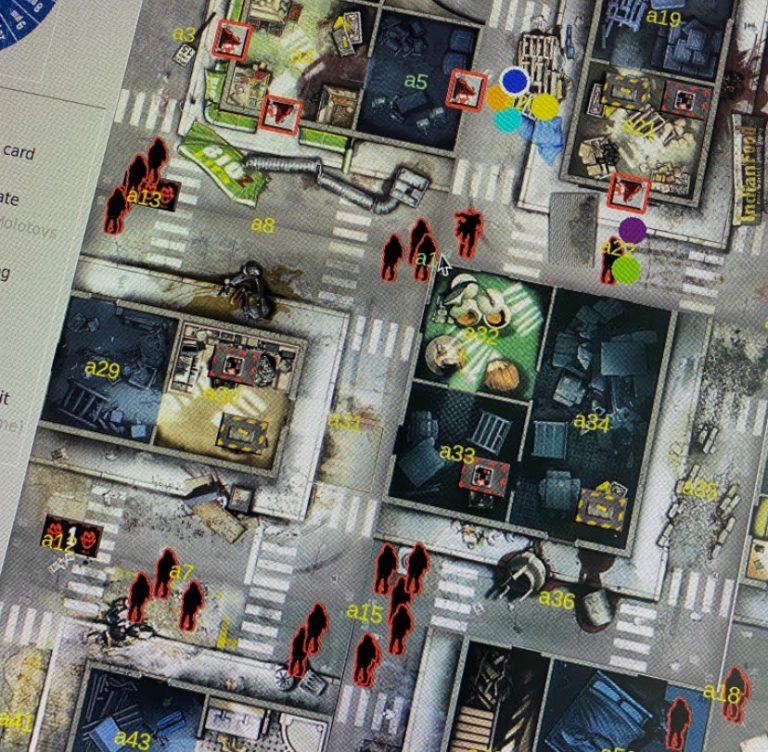
From my September todo list, I have started to allow “locked” doors to be “placed” in zombizide_mapbuilder_gui.py
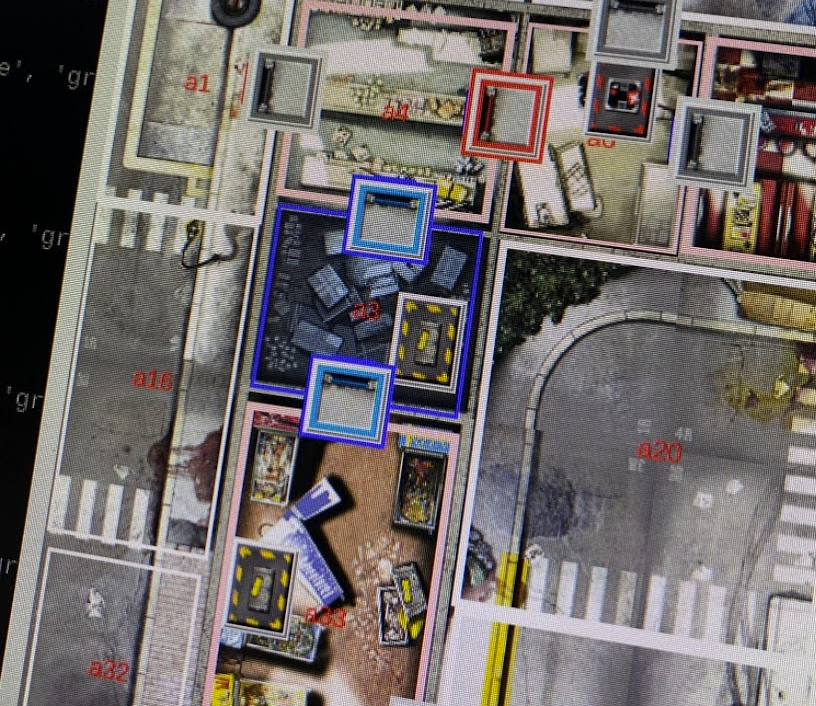
Doors are used to control access to different parts of larger buildings in certain missions. After merging tiles and creating the map, all doors are displayed as icons. Each door can be clicked to cycle through its different states.
Door Types:
- Grey Door (Standard Door):
This is the most common door. It can be opened using an axe, crowbar, or chainsaw. - Red Door (Permanently Locked):
This door cannot be opened throughout the game. It is useful for breaking a large building into smaller sections to prevent the entire building from spawning at once. It can also be used to control survivor movement. - Blue Door (Mission Objective – Blue Card):
This door is locked until the player finds the corresponding blue Mission Card. Multiple blue doors can be set in a building to restrict access until the objective is completed. - Green Door (Mission Objective – Green Card):
Similar to the blue door, this door is unlocked only when the corresponding green Mission Card is found. Multiple green doors can be set to control access to specific areas until the mission objective is met. - Open Door (Permanently Open):
This door is always open. Any dark rooms it connects to are automatically marked as spawned, preventing them from being triggered by other door events.
Mission Setup and Gameplay
Currently, a single person creates and plays each mission, which adds an element of randomness and variety. The Zombized_GUI automatically assigns random blue and green Mission Cards at the start of each game.
If consistent mission setups are desired, I might control this by adding a variable to fix which cards are used for each mission.
Here are some other ideas I might explore to expand doors into gameplay (when I add campaigns at a later stage)
Co-op/Multiplayer Mechanics:
If multiple players are involved, doors could require teamwork to open—e.g., two players must be at different switches, or one player holds the door while another retrieves an item.
Objective Flexibility:
Blue and green Mission Cards can be used to control additional game mechanics beyond doors. For example as they are already used in some missions:
In one mission, the blue and green cards represent fuel and a starter battery for a vehicle (e.g. requirements before driving “pimp mobile”). In another mission, they represent weapons and ammunition (e.g., RPG launcher and rockets).
Conditional Access:
Doors could trigger events when unlocked: alarms, traps, or NPC movements.
Time-Limited or Conditional Doors:
Some doors could open only after a certain number of turns, after defeating enemies, or after completing a puzzle.
Special Door Effects:
Trap Doors: Inflict damage or trigger an enemy spawn if opened without a key/item.
One-Way Doors: Open in one direction only, preventing backtracking. (note in one Zombicide Mission some doors can only be opened from inside a building.
Secret Doors: Hidden until players meet certain conditions or inspect the room.
Dynamic Environment:
Doors could change state during the mission (e.g., a grey door could lock again, or a blue door could turn into a red door after a timer or event).